

The longest place name, near Pōrangahau
Landmark · Central Hawke’s Bay
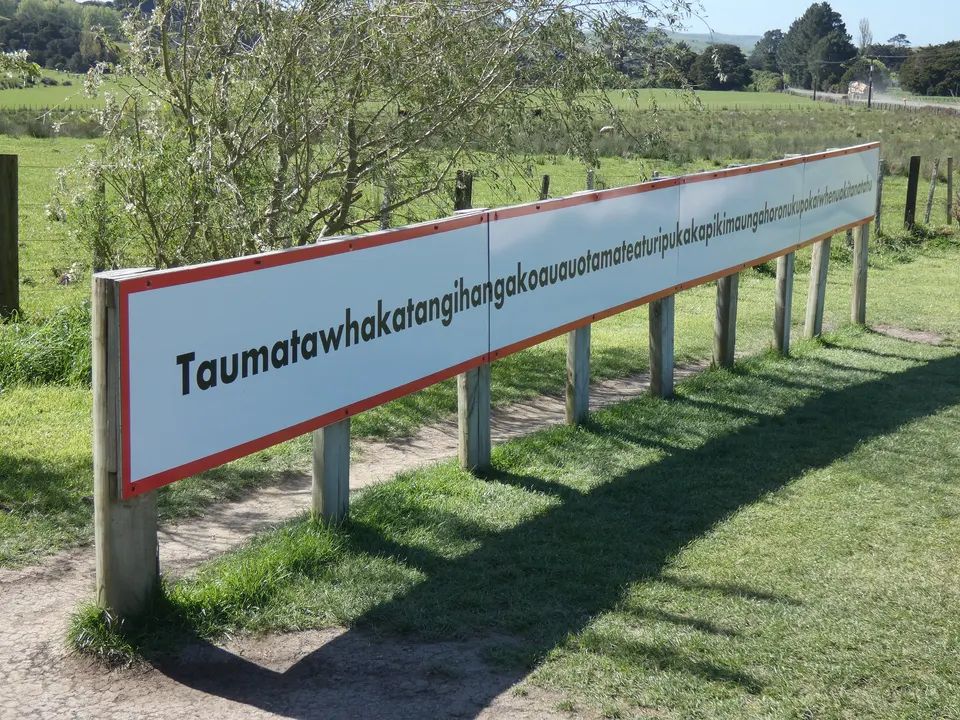
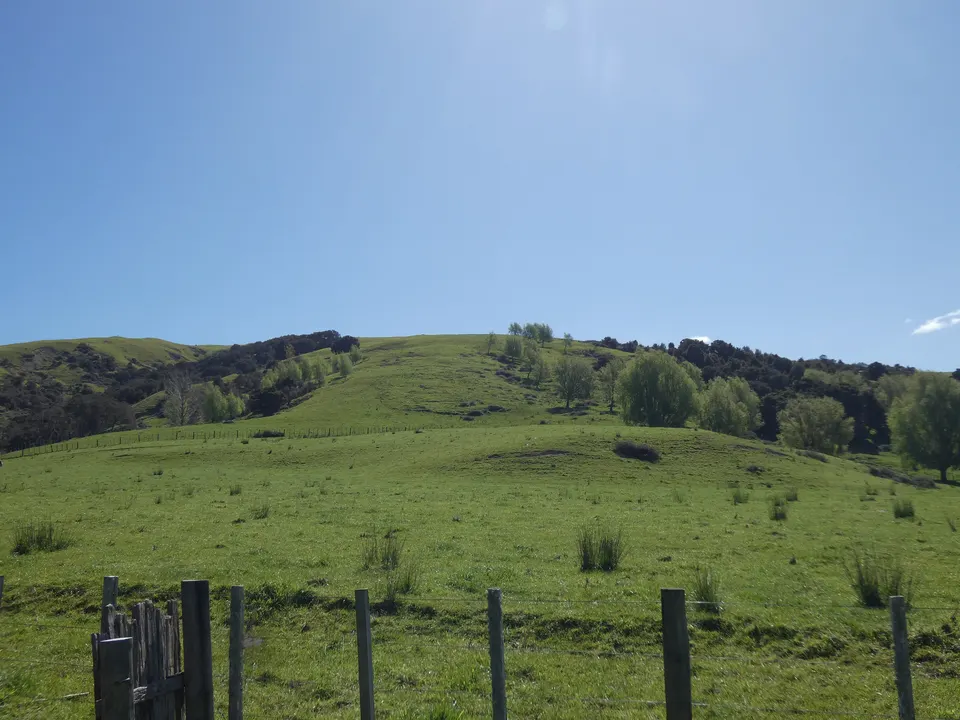
A hill near Pōrangahau, in the south of Central Hawke’s Bay, has the world’s longest place name. A sign about 5 km along Wimbledon Road shows the 85-letter form. The official name is Taumatawhakatangihangakōauauotamateapōkaiwhenuakitānatahu. The hill is on private land, and its name tells of the ancestor Tamatea.
Good to know
| Official name | Taumatawhakatangihangakōauauotamateapōkaiwhenuakitānatahu (57 letters, with macrons since 2019). |
|---|---|
| On the sign | Taumatawhakatangihangakoauauotamateaturipukakapikimaungahoronukupokaiwhenuakitanatahu (85 letters). |
| Sign | About 5 km along Wimbledon Road, near Pōrangahau. |
| Land | Private land of the Mangamaire Nopera Trust. Ask permission before walking on the hill. |
| Mana whenua | Ngāti Kere. |
| Local name | Taumata Hill. |
Where is the longest place name sign?
The sign stands about 5 km along Wimbledon Road, according to Hawke’s Bay Tourism and Tourism New Zealand. Pōrangahau is reached from Waipukurau on Pōrangahau Road. The hill is on the Mangamaire Nopera Trust property, and you need permission to walk on it.
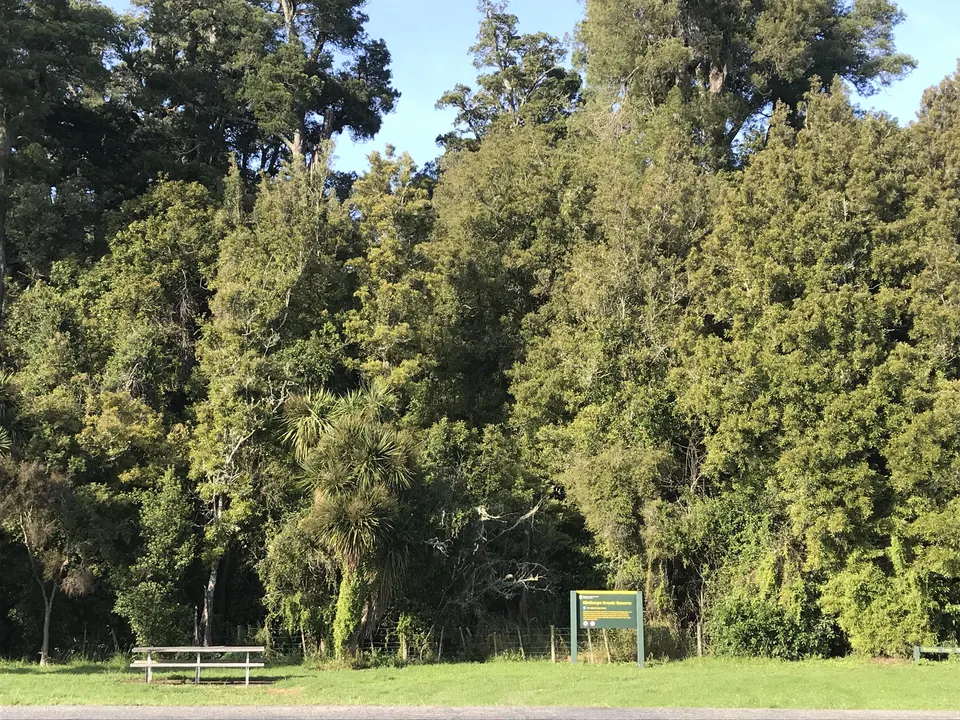
In April 2025 Hawke’s Bay Today reported a new carved sign by artist Jacob Scott, unveiled at a dawn ceremony, along with a carved pou of Tamatea. Visitors can photograph the sign from the car park at a rest stop just off Wimbledon Road.
What is the official spelling of the longest place name?
The official name is Taumatawhakatangihangakōauauotamateapōkaiwhenuakitānatahu. The Honorary Geographic Board approved the name, and it appeared in its list of place names in the New Zealand Gazette in 1948. In June 2019 the New Zealand Geographic Board added three macrons, in kōauau, pōkai and tānatahu.
The name on the roadside sign is longer: Taumatawhakatangihangakoauauotamateaturipukakapikimaungahoronukupokaiwhenuakitanatahu, with 85 letters. Hawke’s Bay Today reported in 2021 that this form is listed by Guinness World Records as the world’s longest place name. Other spellings are in use, including on the new carved sign, so the letters you see may differ.
What does the name mean?
The name tells of Tamatea Pōkai Whenua, a great traveller and navigator known as the ‘land eater’. Hawke’s Bay Tourism gives the meaning, roughly, as the place where Tamatea, the man with the big knees, who slid, climbed and swallowed mountains, played his kōauau (flute).
The account published by Hawke’s Bay Tourism, with permission of the site’s guardians, says Tamatea had to fight another tribe to pass through the land behind Pōrangahau, and his brother was killed. In his grief he stayed for several days, and each morning he sat on the hill and played a lament on his kōauau.
Older versions, including Te Ara’s, say Tamatea played for a loved one. In 2021 Anthony Tipene-Matua, a descendant of Tamatea, told Hawke’s Bay Today that this romantic reading is not the local meaning: the name is about grieving for someone who is no longer there. Ngāti Kere, who hold mana over the name, see it as a taonga that honours their ancestor.
Can you visit the hill itself?
Only with permission. Mana whenua describe the hill as a sacred site. Landeater Ltd manages visits on the land for Ngāti Kere hapū and the Pōrangahau community. In April 2025 it described a self-guided walk of about 3 hours through farmland, and its website lists guided and cultural experiences. Check the operator’s website for what is running before you go.
Questions about The longest place name
How many letters does the longest place name have?
The sign shows 85 letters. The official name has 57.
Where is the longest place name in New Zealand?
On a hill near Pōrangahau in Central Hawke’s Bay. The sign is about 5 km along Wimbledon Road.
Can you climb the hill?
Only with permission. The hill is on private land, and mana whenua regard it as a sacred site.
Who was Tamatea?
Tamatea Pōkai Whenua was a great traveller and navigator, known as the ‘land eater’. The name recalls him playing his kōauau (flute) on the hill.
Sources
Checked 19 November 2026 against these sources. Rules, prices and times change, so check the official page before you go. How we check facts
- New Zealand Gazette: Amendments – New Zealand Geographic Board (21 June 2019)
- New Zealand Gazette 1948, No. 42: List of place-names (Papers Past transcription)
- Hawke’s Bay Today: More than 40 Māori place names in Hawke’s Bay given official recognition (25 June 2019)
- Hawke’s Bay Tourism: The Longest Place Name
- Tourism New Zealand: The longest place name in New Zealand
- Hawke’s Bay Today: Mana whenua want understanding of world’s longest place name to grow (17 September 2021)
- Hawke’s Bay Today: New carved sign unveiled at world’s longest place name in Pōrangahau (9 April 2025)
- The Longest Place Name (Landeater Ltd)
- Te Ara: Hawke’s Bay places – Southern coast
- Central Hawke’s Bay District Council: Te Paerahi Beach, Pōrangahau
- Wikipedia: Taumatawhakatangihangakoauauotamateaturipukakapikimaungahoronukupokaiwhenuakitanatahu (background)
- Wikipedia: Pōrangahau (coordinates)